



P2Y Receptor
P2Y receptors are a class of G protein-coupled receptors (GPCRs) activated by extracellular nucleotides (ATP, UTP, and UDP). There are eight mammalian P2Y receptor subtypes (P2Y1, P2Y2, P2Y4, P2Y6, P2Y11, P2Y12, P2Y13, and P2Y14). The P2Y receptors are expressed in various cell types and play important roles in physiology and pathophysiology including inflammatory responses and neuropathic pain.
The P2Y family can be further divided into a subfamily of five P2Y1, P2Y2, P2Y4, P2Y6, and P2Y11Rs (“P2Y1-like”) that stimulate phospholipase C (PLC) through Gq protein and a second subfamily of P2Y12, P2Y13, and P2Y14Rs (“P2Y12-like”) that inhibit adenylate cyclase through Gi protein. Other effector pathways have been documented, such as coupling of the P2Y11R to Gs as well as to Gq in some cells to induce stimulation of cyclic AMP production.
P2Y Receptor Isoform Specific Products
All Product Categories
-
P2Y Receptor Inhibitors
(58)
View all products
-
P2Y Receptor Agonists
(50)
View all products
-
P2Y Receptor Antagonists
(85)
View all products
-
P2Y Receptor Activators
(11)
View all products
-
P2Y Receptor Modulators
(4)
View all products
-
P2Y Receptor Controls
(3)
View all products
-
P2Y Receptor Ligands
(3)
View all products
-
P2Y Receptor Related Products (229)
Related Products (229)

-
Antibodies (2)
-
P2Y Receptor Isoform Comparison
-
MRS2365
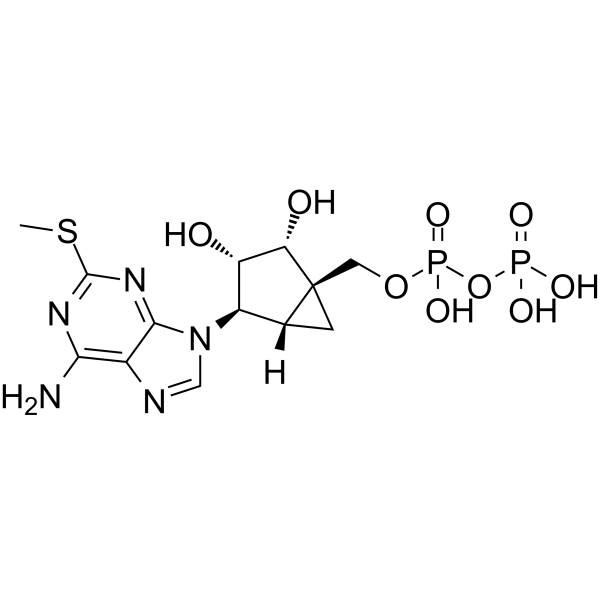 0 ImagesCat. No.: HY-108656CAS No.: 436847-09-5MRS2365 is a potent and selective P2Y1 receptor (EC50=0.4 nM) /[35S]GTPγS binding/β-arrestin 2 recruitment agonist with an EC50 of 0.4 nM. MRS2365 relieves mechanical allodynia and increases mechanical sensitivity. MRS2365 shows little agonist or antagonist activity at the P2Y12 or P2Y13 receptors.
-
8-Aminoadenine
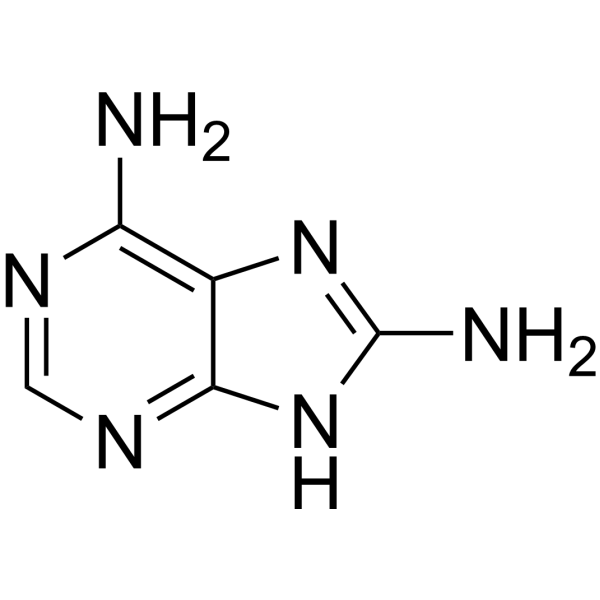 0 Images8-Aminoadenine is an adenine receptor 1 (rAde1R) inhibitor with a Ki of 6.51 μM in rat and 0.0341 μM in human. 8-Aminoadenine inhibits isoprenaline-induced cAMP accumulation and adenine uptake in astrocytoma cells expressing rAde1R. 8-Aminoadenine serves as a lead structure for the development of adenine receptor ligands to elucidate the functions of the adenine receptor family.
-
MRS2179 tetrasodium
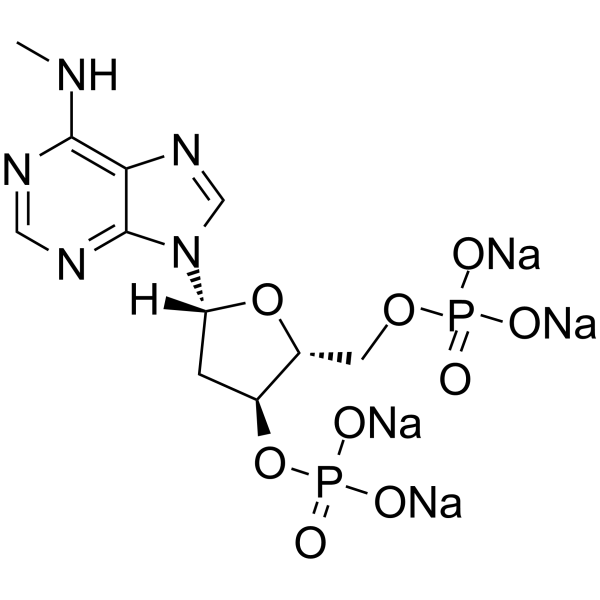 0 ImagesCat. No.: HY-101308CAS No.: 1454889-37-2MRS2179 tetrasodium is a competitive P2Y1 receptor antagonist, with a Kb of 102 nM and a pA2 of 6.99 for turkey P2Y1 receptor. MRS2179 tetrasodium is selective for P2Y1 over P2X1 (IC50=1.15 µM), P2X3 (12.9 µM), P2X2, P2X4, P2Y2, P2Y4, and P2Y6 receptors. MRS2179 tetrasodium inhibits platelet aggregation.
-
Prasugrel-d3
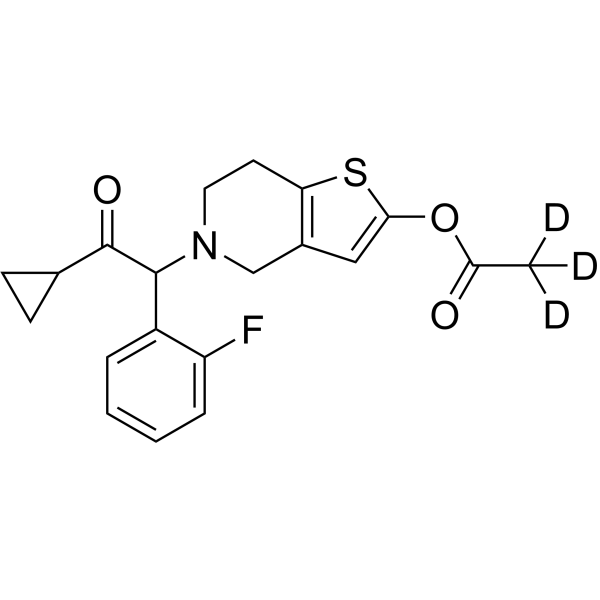 0 ImagesSynonyms: PCR 4099-d3Prasugrel-d3 is the deuterium labeled Prasugrel. Prasugrel (PCR 4099), a thienopyridine and proagent, inhibits platelet function. Prasugrel is an orally active and potent P2Y12 receptor antagonist, and inhibits ADP-induced platelet aggregation.
-
P2RY13 Human Pre-designed siRNA Set A
 0 ImagesCat. No.: HY-RS09922
P2RY13 Human Pre-designed siRNA Set A contains three designed siRNAs for P2RY13 gene (Human), as well as a negative control, a positive control, and a FAM-labeled negative control.
-
UTP trisodium salt, 100 mM Solution, PCR Grade
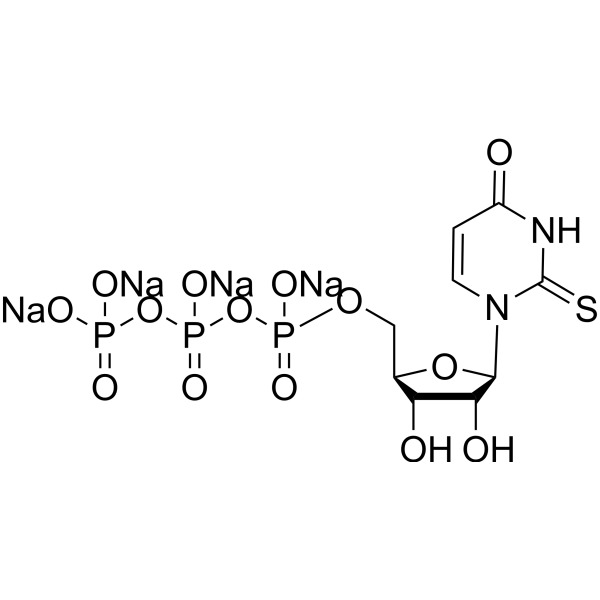
 0 ImagesCat. No.: HY-107372HCAS No.: 19817-92-6Synonyms: Uridine 5'-triphosphate trisodium salt, 100 mM Solution, PCR GradeUTP (Uridine 5'-triphosphate) trisodium salt, 100 mM Solution, PCR Grade is a solution prepared from uridine triphosphate at a concentration of 100 mM, free of DNase, RNase and phosphatase contamination, suitable for molecular biology research. Uridine triphosphate (HY-107372) is a pyrimidine nucleoside triphosphate that is used as a substrate to synthesize RNA or as an energy source in metabolic reactions. Uridine triphosphate activates membrane-bound P2Y2 receptors.
-
Becondogrel
 0 ImagesSynonyms: 2-OxoclopidogrelBecondogrel (2-Oxoclopidogrel) is the metabolite of Clopidogrel (HY-15283). Becondogrel irreversibly inhibits P2Y12 receptor, thereby inhibiting platelet aggregation and thrombosis.
-
Regrelor disodium
 0 ImagesSynonyms: INS50589Regrelor disodium (INS 50589) is a platelet P2Y12 receptor antagonist. Regrelor disodium is a well-tolerated, reversible ADP competitive antagonist. Regrelor disodium inhibits cell proliferation. Regrelor disodium can be used in inflammation-related research.
-
2-Methylthio-AMP diTEA
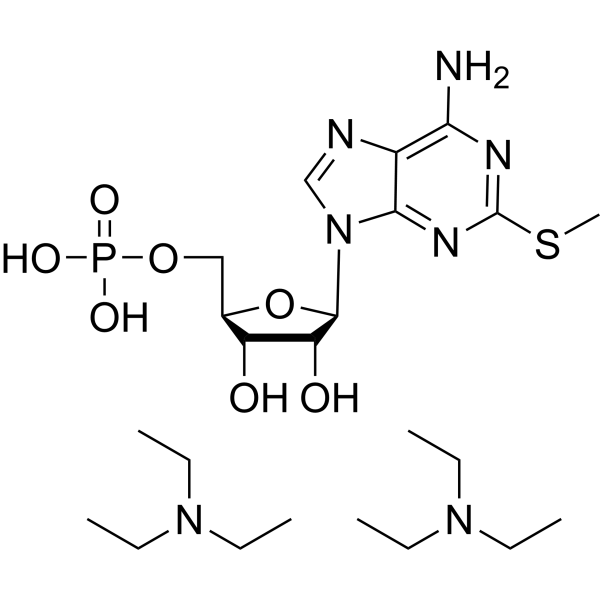 0 ImagesCat. No.: HY-125989BCAS No.: 1227193-98-7Synonyms: 2-MeSAMP diTEA; 2-Methylthioadenosine 5′-monophosphate diTEA; 2-Methylthioadenosine 5′-phosphate diTEA2-Methylthio-AMP (2-MeSAMP) diTEA is a selective and direct P2Y12 antagonist. 2-Methylthio-AMP diTEA is an inhibitor of ADP-dependent platelet aggregation.
-
Uridine 5′-diphosphoglucose-13C disodium
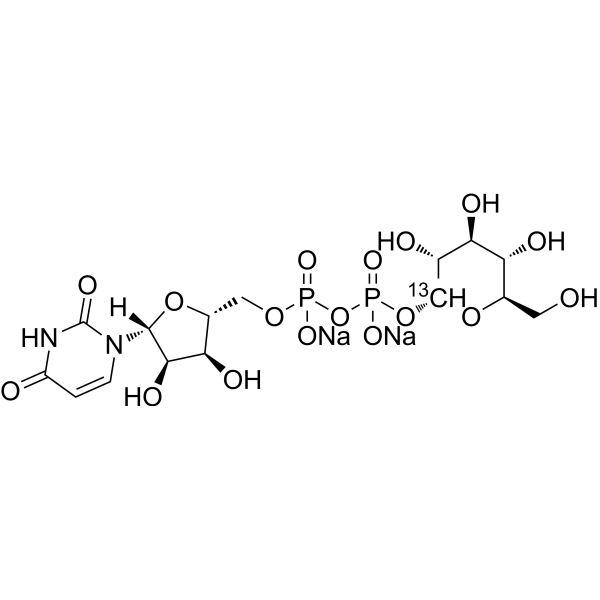 0 ImagesSynonyms: UDP-D-Glucose-13C disodiumUridine 5′-diphosphoglucose-13C (UDP-D-Glucose-13C) disodium is the 13C labeled Uridine 5′-diphosphoglucose disodium (HY-N7032). Uridine 5’-diphosphoglucose (UDP-glucose) disodium, secreted by cardiomyocytes during ischemia and reperfu, is a potent agonist of the proinflammatory P2Y14 receptor. It acts an important role in the regulation of inflammation and neutrophil polarization in neutrophils. Uridine 5’-diphosphoglucose disodium is also the precursor of glucose-containing oligosaccharides, polysaccharides, glycoproteins, and glycolipids in animal tissues and in some microorganisms. Uridine 5’-diphosphoglucose disodium is promising for research in counteracting myocardial infarction/reperfusion (MIR)-induced inflammation in the heart tissue.
-
MRS 2179 ammonium
 0 ImagesCat. No.: HY-115273APurity: 99.34%MRS 2179 ammonium is a selective and competitive antagonist for P2Y1 receptor, with KB of 0.177 μM.
-
Uridine 5′-diphosphoglucose-13C6 disodium
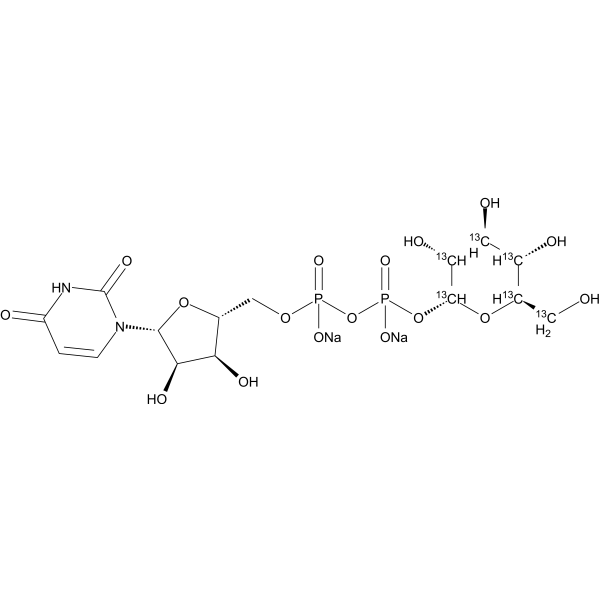 0 ImagesSynonyms: UDP-D-Glucose-13C6 disodiumUridine 5′-diphosphoglucose-13C6 (UDP-D-Glucose-13C6) disodium is the 13C labeled Uridine 5′-diphosphoglucose disodium (HY-N7032). Uridine 5’-diphosphoglucose (UDP-glucose) disodium, secreted by cardiomyocytes during ischemia and reperfu, is a potent agonist of the proinflammatory P2Y14 receptor. It acts an important role in the regulation of inflammation and neutrophil polarization in neutrophils. Uridine 5’-diphosphoglucose disodium is also the precursor of glucose-containing oligosaccharides, polysaccharides, glycoproteins, and glycolipids in animal tissues and in some microorganisms. Uridine 5’-diphosphoglucose disodium is promising for research in counteracting myocardial infarction/reperfusion (MIR)-induced inflammation in the heart tissue.
-
MRS2768 tetrasodium salt
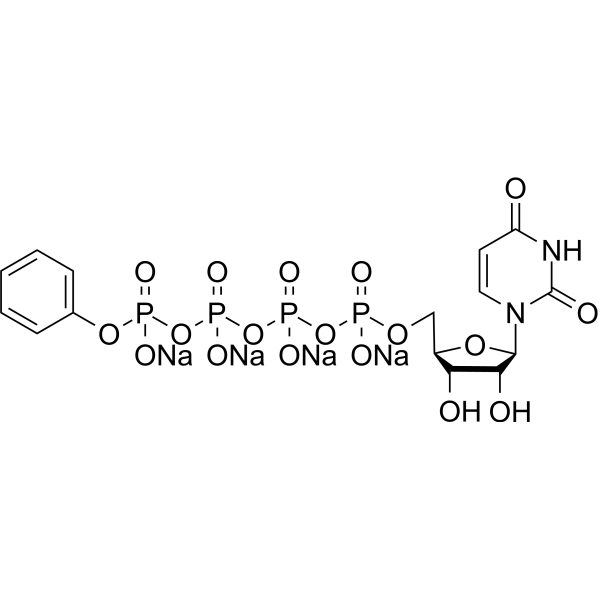 0 ImagesMRS2768 tetrasodium salt is a potent, selective, and metabolically stable P2Y2 receptor agonist with an EC50 of 1.89 μM for the human P2Y2 receptor. MRS2768 tetrasodium salt activates Gq/PLC/PKC signaling, leading to downstream phosphorylation of Akt, eNOS, and ERK, with effects varying by cell type. MRS2768 tetrasodium salt inhibits ENaC via Gq/PKC/Src/Akt to promote natriuresis and lower blood pressure in the kidney. MRS2768 tetrasodium salt activates eNOS to increase NO secretion in endothelial cells. MRS2768 tetrasodium salt drives proliferation via PI3K/Akt in fibroblasts and cancer cells. MRS2768 tetrasodium salt exerts anti-apoptotic effects through PKC/Src/Akt in cardiomyocytes. MRS2768 tetrasodium salt can be applied to investigate P2Y2-dependent pathological processes, including acute kidney injury, chronic kidney disease and renal fibrosis, DOCA-salt induced hypertension, myocardial infarction, pulmonary arterial hypertension, pancreatic cancer, cardiac fibrosis, dry eye disease, as well as shear stress-mediated vascular remodeling and atherosclerosis.
-
Sp-ATPαS tetrasodium solution (100mM)
 0 ImagesCat. No.: HY-137626APurity: 98.60%Sp-ATPαS tetrasodium is a thiophosphonate analogue of ATP. Sp-ATPαS tetrasodium is a competitive antagonist of the human P2Y1 receptor and can inhibit the calcium signal induced by ADP. Sp-ATPαS tetrasodium has higher metabolic stability than ATP. Sp-ATPαS tetrasodium can be used to study the binding mode of metal-nucleotide in enzymatic reactions.
-
Adenosine 2',5'-diphosphate sodium
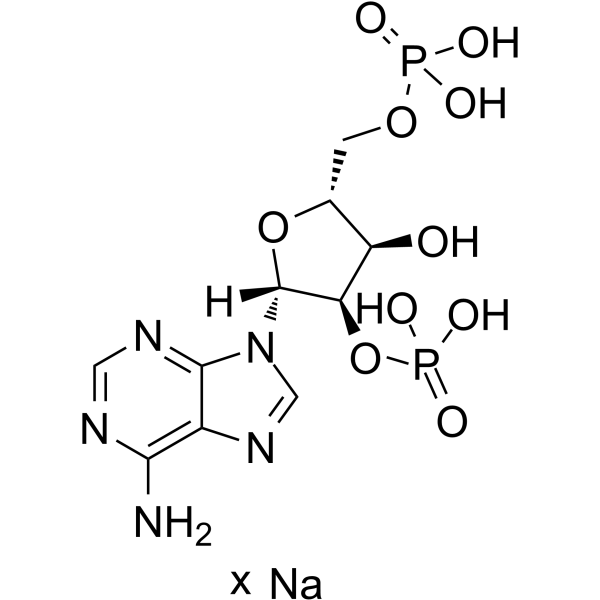 0 ImagesAdenosine 2',5'-diphosphate sodium is a competitive P2Y1 antagonist. Adenosine 2',5'-diphosphate sodium exhibits non-selective antagonism at recombinant and human platelet P2X1 receptors.
-
Uridine 5′-diphosphoglucose
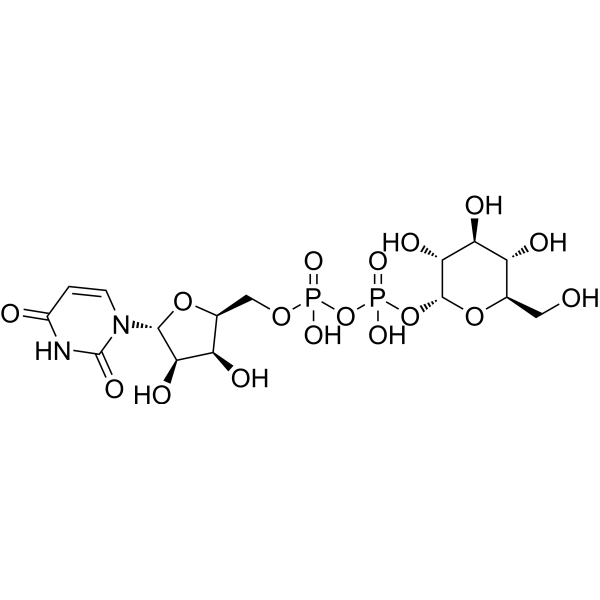 0 ImagesUridine 5’-diphosphoglucose (UDP-glucose), secreted by cardiomyocytes during ischemia and reperfu, is a potent agonist of the proinflammatory P2Y14 receptor. It acts an important role in the regulation of inflammation and neutrophil polarization in neutrophils. Uridine 5’-diphosphoglucose is also the precursor of glucose-containing oligosaccharides, polysaccharides, glycoproteins, and glycolipids in animal tissues and in some microorganisms. Uridine 5’-diphosphoglucose is promising for research in counteracting myocardial infarction/reperfusion (MIR)-induced inflammation in the heart tissue.
-
P2Y12 antagonist 2
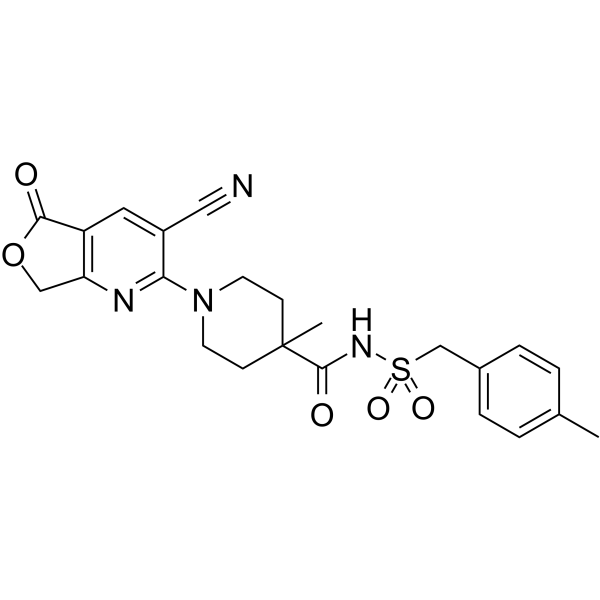 0 ImagesCat. No.: HY-111755CAS No.: 2299200-91-0P2Y12 antagonist 2 is a potent P2Y12 receptor antagonist. P2Y12 antagonist 2 exhibits excellent antiplatelet aggregation potency with an IC50 value of 2.94 μM as well as antithrombotic efficacy in a rat ferric chloride model. P2Y12 antagonist 2 shows a superior safety profile than Clopidogrel (HY-15283) in a rat tail-bleeding model. P2Y12 antagonist 2 can be used to research thromboembolic disorders.
-
Cangrelor
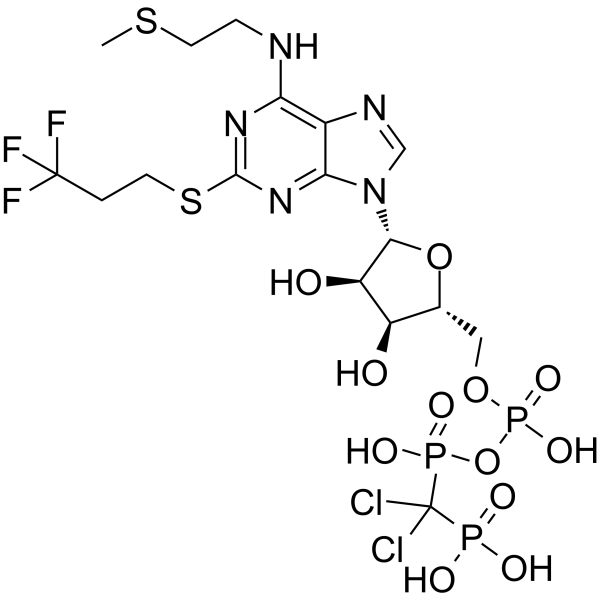 0 ImagesCat. No.: HY-19638CAS No.: 163706-06-7Synonyms: AR-C69931MXCangrelor (AR-C69931MX), an adenosine triphosphate analogue, is an intravenous, reversible and selective platelet P2Y12 antagonist, with prompt and potent antiplatelet effects. Cangrelor directly blocks adenosine diphosphate (ADP)-induced activation and aggregation of platelets. Cangrelor is also a nonspecific GPR17 antagonist.
-
NF546
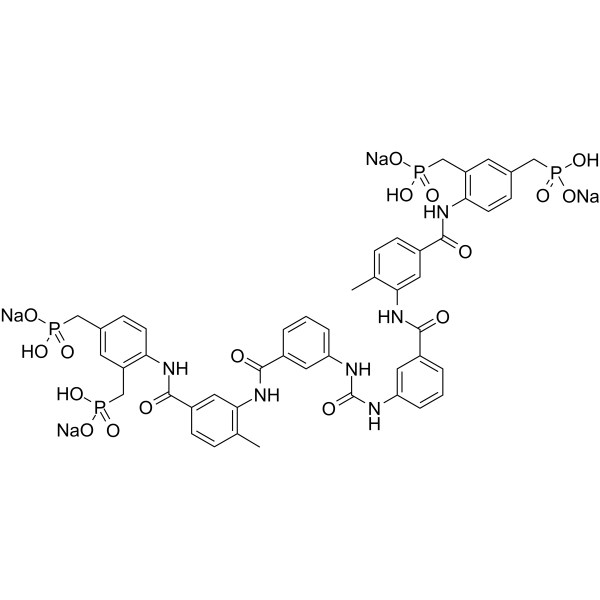 0 ImagesCat. No.: HY-108661CAS No.: 1006028-37-0NF546 is a selective non-nucleotide P2Y11 agonist with a pEC50 of 6.27. NF546 stimulates release of interleukin-8 from human monocyte-derived dendritic cells.




